


Top Strategies for Scaling Your Small Business

Scaling a small business is an exciting yet challenging phase. Growth requires careful planning, resources, and smart strategies to increase revenue, expand operations, and reach more customers without sacrificing quality. Many entrepreneurs dream of scaling but struggle with execution.

In this article, we’ll explore effective strategies to scale your small business successfully.


Why Scaling Matters

Scaling allows your business to:

Increase revenue and market share

Reach a larger audience

Improve operational efficiency

Build a stronger brand presence

Mini-Story:
Sophia, a handmade jewelry business owner, scaled her business by expanding online and outsourcing production. Sales and brand visibility grew rapidly without compromising quality.


Step 1: Assess Your Business Readiness

Before scaling, ensure your business is stable and prepared.

Indicators of readiness:

Consistent cash flow

Reliable product or service quality

Clear operational processes

Satisfied customer base

Mini-Story:
Emma, a fitness coach, evaluated her existing online program. She ensured her content delivery and client management systems could handle more clients before expanding.


Step 2: Set Clear Growth Goals

Goals give direction and help measure success.

Tips:

Define revenue targets, market expansion plans, or customer acquisition goals

Break down long-term goals into smaller, achievable milestones

Review and adjust goals regularly

Mini-Story:
Liam aimed to double online sales within six months. He set weekly targets for marketing campaigns, product launches, and customer engagement.


Step 3: Understand Your Market and Competition

Scaling without understanding your market can lead to failure.

Tips:

Conduct market research to identify demand and trends

Analyze competitors to identify gaps and opportunities

Understand customer preferences and behavior

Mini-Story:
Rachel researched local bakery trends before opening a second location. She identified popular products and pricing strategies that ensured success.


Step 4: Strengthen Your Team

A strong team is crucial for scaling efficiently.

Tips:

Hire skilled employees or freelancers as needed

Delegate responsibilities to focus on growth strategies

Invest in training and development

Mini-Story:
Sophia hired additional artisans and a marketing assistant. Delegating production and marketing allowed her to focus on strategy and expansion.


Step 5: Streamline Operations

Efficient operations reduce costs and prepare your business for growth.

Strategies:

Automate repetitive tasks (inventory, billing, social media)

Optimize supply chain and logistics

Implement standard operating procedures (SOPs)

Mini-Story:
Emma automated client scheduling and payments. The efficiency allowed her to handle more clients without compromising quality.


Step 6: Diversify Products or Services

Expanding offerings can attract new customers and increase revenue.

Tips:

Add complementary products or services

Test new offerings with small pilot programs

Use customer feedback to refine ideas

Mini-Story:
Liam expanded his electronics store to include accessories and repair services. Existing customers appreciated the convenience, and revenue increased.


Step 7: Leverage Marketing and Sales Channels

Effective marketing drives awareness and sales during scaling.

Strategies:

Use social media, email, and content marketing

Explore paid advertising for targeted growth

Collaborate with influencers or partner brands

Mini-Story:
Rachel partnered with local cafes to sell her bakery products. Combined with social media campaigns, this strategy significantly increased her reach and sales.


Step 8: Monitor Financial Health

Scaling requires financial discipline to ensure sustainability.

Tips:

Track cash flow, expenses, and revenue carefully

Maintain a budget for expansion activities

Consider funding options like loans, grants, or investors

Mini-Story:
Sophia tracked production costs and reinvested profits strategically. She avoided unnecessary expenses, ensuring a sustainable scale-up.


Step 9: Focus on Customer Experience

Happy customers drive growth through repeat business and referrals.

Tips:

Maintain quality as you expand

Provide excellent customer support

Collect feedback and make improvements

Mini-Story:
Emma continued offering personalized coaching and check-ins even as her client base grew. Retention remained high due to consistent quality.


Step 10: Measure and Adjust Strategies

Scaling requires continuous evaluation and adaptation.

Tips:

Use key performance indicators (KPIs) to track progress

Adjust strategies based on data and feedback

Celebrate successes but learn from failures

Mini-Story:
Liam monitored weekly sales, ad performance, and customer engagement. Insights helped him optimize marketing and inventory, boosting growth steadily.


Final Motivation

Scaling your small business is achievable with planning, discipline, and smart strategies. Focus on:

Assessing readiness and setting clear goals

Strengthening your team and streamlining operations

Diversifying offerings and leveraging marketing channels

Maintaining customer experience and monitoring performance

Action Step: Review one area of your business today that can be optimized for growth. Implement one change this week. Small, strategic improvements build the foundation for long-term success.


10 Steps to Start a Successful Business in 2025

Starting a business is exciting, but it can also feel overwhelming. You may have amazing ideas, energy, and ambition, but without a roadmap, many entrepreneurs stumble or give up too soon. The good news is that with a clear plan, you can start your business confidently and increase your chances of success.

In this article, we’ll explore 10 practical steps to start a successful business in 2025, complete with examples and actionable tips.


Step 1: Find a Business Idea That Excites You

The first step in starting a business is choosing the right idea. A successful business begins where your skills, passion, and market demand intersect.

Ask yourself:

What am I naturally good at?

What activities make me lose track of time?

What problems do people often ask me to help solve?

For example, if you love fitness and people often ask for advice on workouts, you could start an online fitness coaching business. If you enjoy tech gadgets, perhaps a blog reviewing new products could work.

Your business will require long-term commitment, so choosing an idea that excites you makes the journey more enjoyable.


Step 2: Research the Market

A great idea isn’t enough if no one wants it. Market research helps you understand who your potential customers are and what they need.

Some practical steps:

Look for competitors and see what they offer

Read reviews of similar products or services

Join online communities or social media groups to listen to potential customers

Survey friends or online followers for feedback

Example: If you want to sell healthy snacks, check if there are similar products in your area or online. See what customers love or dislike about existing options. This gives insight into how to differentiate your business.


Step 3: Define Your Target Audience

Knowing who your ideal customer is will guide your marketing, pricing, and product design.

Ask:

What age group, gender, or profession is my ideal customer?

What problems do they face, and how can I solve them?

Where do they spend time online or offline?

Example: If you’re starting an online business selling eco-friendly products, your target audience might be environmentally conscious adults aged 20–40 who follow sustainable living influencers on Instagram.


Step 4: Validate Your Idea

Validation means testing if your idea can actually make money before investing heavily.

Ways to validate:

Offer a minimal version of your product or service

Pre-sell or take pre-orders

Launch a social media campaign to gauge interest

Ask for feedback on prototypes or beta versions

Example: A friend started an online course on personal development by offering the first lesson for free. People signed up quickly, validating demand, and she knew it was worth expanding.


Step 5: Create a Simple Business Plan

A business plan doesn’t need to be 50 pages long. Even a 1–2 page plan can guide your efforts. Include:

Business goals (short-term and long-term)

Products or services

Target market

Marketing strategies

Basic financial plan

Example: If your goal is to earn $500 a month initially, plan how many sales or clients are needed and how you will reach them.


Step 6: Register Your Business

Even a small online business benefits from legal registration. It protects your brand and allows you to open a business bank account, pay taxes properly, and gain credibility.

Steps may include:

Registering a business name

Obtaining a business license (if required)

Opening a business bank account

Considering insurance

Example: A freelance graphic designer registered a small business to appear professional and make invoicing easier for clients.


Step 7: Build Your Online Presence

In 2025, most customers discover businesses online. A website, social media profiles, or both are essential.

Tips:

Build a simple website using WordPress, Wix, or Shopify

Create social media profiles on platforms your audience uses

Share engaging content (tips, stories, demos, or testimonials)

Use SEO techniques to get organic traffic

Example: A local fitness coach gained 200 clients by posting weekly workout videos on Instagram and sharing tips on her website blog.


Step 8: Launch and Promote

Once everything is ready, launch your business and let people know. Promotion doesn’t have to be expensive:

Post on social media regularly

Send emails to friends and potential clients

Collaborate with influencers or partners in your niche

Offer discounts or bonuses for early customers

Example: An online bakery created excitement by offering a “first 50 orders get 20% off” campaign, which helped her get initial customers quickly.


Step 9: Collect Feedback and Improve

Early customers are your best teachers. Listen to their feedback and make improvements:

Ask for reviews or suggestions

Fix common complaints quickly

Update your product or service based on customer needs

Example: A freelancer improved her online course after feedback revealed that some lessons were too long. Shorter, more focused lessons led to better reviews and more referrals.


Step 10: Stay Consistent and Keep Learning

Consistency and ongoing learning are critical for business growth.

Show up daily for your audience

Post content regularly

Track progress and adjust strategies

Learn new skills or tools

Example: A blogger who consistently published weekly articles for a year saw traffic grow from zero to thousands per month, eventually monetizing through ads and affiliate marketing.


Final Motivation

Starting a business is a journey of small steps, learning, and persistence. Passion, planning, and action create momentum, even when challenges arise.

Remember:

Start with a strong idea that excites you

Validate your concept before heavy investment

Focus on your audience and provide real value

Stay consistent and improve over time

Your business doesn’t need to be perfect on day one — it grows as you take action, learn from mistakes, and keep moving forward.

Action Step: Write down one business idea you’re excited about, identify your target audience, and take the first small step today. Momentum starts with action.

Why Discipline Always Outperforms Motivation

https://guides.secondnature.io/wp-content/uploads/2019/03/Screenshot-2019-05-16-at-14.06.36.png
https://fastercapital.com/i/Consistency--Consistency-Matters--How-Timeliness-Creates-Lasting-Impact--Achieving-Goals-and-Building-Habits.webp
https://m.media-amazon.com/images/I/81YhZxhSktL._UF1000%2C1000_QL80_.jpg

✨ Introduction

Motivation is an amazing feeling — it’s that spark of energy that pushes you to start something new. You feel excited. You feel unstoppable. You say “Tomorrow I’ll change everything!”

But then… tomorrow comes.
And motivation disappears.

That’s when most people give up.
Not because they’re weak —
but because they depend on motivation instead of discipline.

Discipline doesn’t rely on feelings.
Discipline doesn’t ask if you’re in the mood.
Discipline shows up whether you feel like it or not.

If your goal is to become successful, healthier, richer, smarter — discipline is what will get you there. This article will show you how to build discipline that lasts a lifetime.


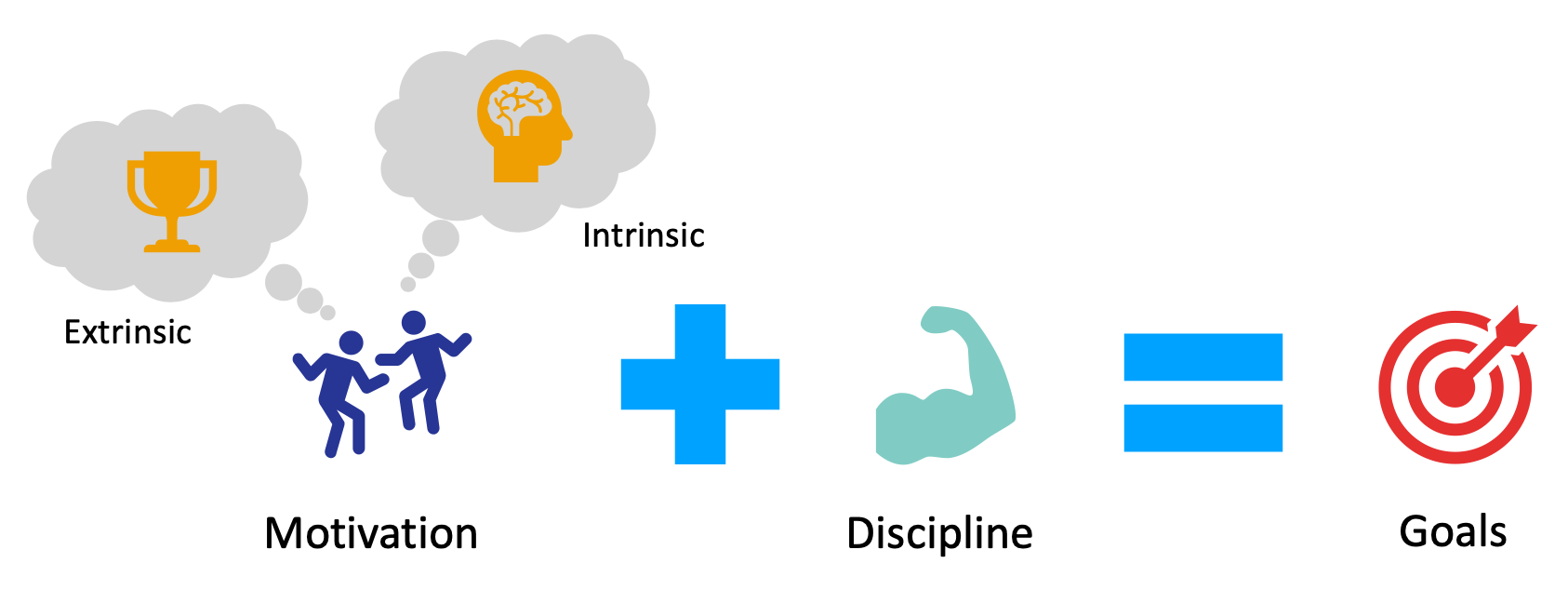
✅ Motivation Gets You Started — Discipline Keeps You Going

https://media.licdn.com/dms/image/v2/D4E22AQGrr6kgfObcTg/feedshare-shrink_800/feedshare-shrink_800/0/1714749234755?e=2147483647&t=VHNXEA-6Cv-4PtfJHX76EusD0L8UneQoEekiCTmWKB4&v=beta
https://i.pinimg.com/736x/43/2d/44/432d44d8a21e6a274287049cb77052c8.jpg
https://unicminds.com/wp-content/uploads/2023/12/image-6.png

Motivation is emotional.
It comes and goes.

But discipline is a system.
A commitment.
A decision to act consistently.

Discipline says:

“I will do the work even when I don’t feel like it.”

That simple shift separates winners from quitters.
Ordinary from extraordinary.
Dreamers from achievers. ✅


✅ Why Motivation Fails

Motivation usually comes from:
⚡ A video
⚡ A quote
⚡ A new idea
⚡ A burst of excitement

It feels powerful… until reality hits:

  • You feel tired
  • You feel bored
  • You feel discouraged
  • You don’t see results yet

Your brain wants comfort.
Comfort kills progress.

Motivation burns fast.
Discipline burns forever. 🔥


✅ How Discipline Creates Real Results

Think of your goals like planting a tree:
🌱 Motivation is planting the seed
🌳 Discipline is watering it every day

Without consistency, nothing grows.
Without discipline, nothing changes.

Your best life is built one daily action at a time.


✅ Build Discipline in 5 Powerful Steps

✅ Step 1: Set Clear and Simple Goals

Your brain loves clarity.
Instead of:
❌ “I want to get fit”
Say:
✅ “I will work out 20 minutes every morning at 7 AM”

Specific goals create consistent actions.


✅ Step 2: Create a Routine and Stick to It

Routines turn decisions into habits.
Habits turn effort into autopilot.

Example:

  • Wake up at the same time
  • Exercise at the same time
  • Work on goals at the same time

Do it until it becomes automatic. ✅


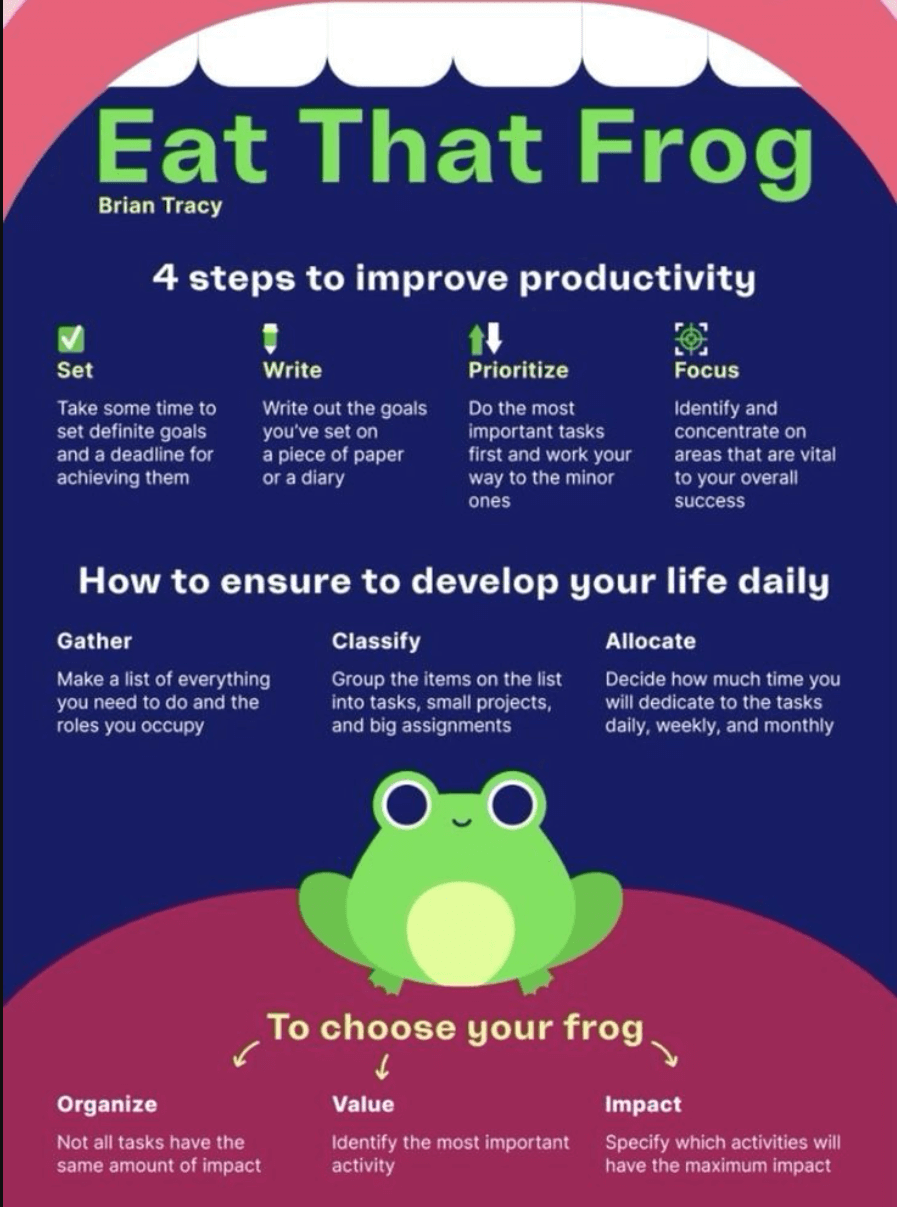
✅ Step 3: Do the Hard Thing First

https://pomotastic.com/assets/img/blog/eat-that-frog.png
https://media.licdn.com/dms/image/v2/D4D12AQGyVw3zldVxZg/article-cover_image-shrink_720_1280/B4DZeqBIPbH4AM-/0/1750904116283?e=2147483647&t=D4ZcTICljOumDvxsXY1tS2vEX1-OuwZ2BZV_Zeb861Q&v=beta
https://hagengrowth.com/wp-content/uploads/2024/06/How-habit-stacking-works.jpg

Your energy is strongest in the morning — use it wisely.
Finish the hardest task first and the rest of the day becomes easier.

When you win your morning, you win your day.


✅ Step 4: Track Progress — Even Small Wins

Success is built on tiny victories.

✅ Every workout
✅ Every page you read
✅ Every habit you complete

Track it. Celebrate it.
Your brain will crave more progress.


✅ Step 5: Remove Excuses

Every excuse has the same message:

“My comfort is more important than my dreams.”

Ask yourself daily:
What matters more — who I am now or who I want to become?

Discipline always chooses the future you. 💪✨


✅ When You Don’t Feel Like It — Do It Anyway

This is the secret.
The magic moment.
The turning point.

The day you show up WITHOUT motivation…
You win. ✅

That’s when discipline takes over.
That’s when transformation happens.
That’s when new levels unlock.


✅ Real-Life Proof

Every successful person you admire didn’t succeed because of motivation:
🏋️ Athletes train even on bad days
💼 Entrepreneurs work when tired
📚 Students study even without inspiration

They became winners because they didn’t quit.

Discipline makes ordinary people extraordinary.


✅ A 21-Day Discipline Challenge

✔️ Do one task daily for 21 days:

  • Wake up and make your bed
  • Drink water immediately
  • Do a tiny workout (10 mins)
  • Spend 15 mins on your goal
  • Avoid lazy excuses

After 21 days?
You’ll have a new identity:
→ A disciplined person 🔥


✅ FAQ (SEO Boost + AdSense Friendly)

Q: How long does it take to build discipline?
You can see changes in as little as 3 weeks.

Q: What if I miss a day?
Don’t quit. Reset. Continue.
Discipline isn’t perfection — it’s persistence.

Q: Can discipline improve my confidence?
YES. Confidence grows every time you keep a promise to yourself.


✅ Final Motivation

Motivation may start the journey…
But discipline crosses the finish line.

You deserve success.
You deserve growth.
You deserve the life you dream of.

And you’re building it one disciplined day at a time.

How to Build Self Confidence Step by Step

✨ Introduction

Self-confidence is the foundation of success, happiness, and personal growth. It’s the strength that tells you:
“I can do this. I deserve this. I’m becoming better.”

But confidence isn’t something you are born with — it’s something you build. Every skill, every accomplishment, every moment you decide not to give up… adds another brick to your inner strength.

In this guide, you’ll learn simple and practical steps to boost your confidence no matter where you are starting from — whether you feel shy speaking up, doubt your abilities, or fear failure.

Remember: confidence is a muscle — the more you use it, the stronger it becomes.


✅ Step 1: Understand Where Your Confidence Comes From

Confidence isn’t magic — it grows from:
✅ Courage
✅ Experience
✅ Preparation
✅ Self-belief

Start by recognizing what currently kills your confidence:

Negative self-talk

Comparing yourself to others

Past failures

Judgment from people

Fear of making mistakes

You can’t fix what you don’t understand — so this awareness is the first win.

✨ Write down 5 things that make you feel strong
And 5 things that make you doubt yourself

Awareness creates clarity.
Clarity creates change. ✅


✅ Step 2: Set Small Wins & Celebrate Every Progress

Confidence grows when you achieve things — even small things.

Examples:

Waking up earlier

Drinking water in the morning

Completing a workout

Reading for 10 minutes

Speaking confidently in one conversation

Every time you win, your brain says:
👉 “I’m capable. I can do more.”

Track your wins daily — build momentum like leveling up in a game.

💡 Motivation Tip:
Small daily victories beat big, inconsistent ones.


✅ Step 3: Improve Your Body Language & Appearance

Did you know? Your brain listens to your body.
When you:
✅ Stand tall
✅ Make eye contact
✅ Smile
✅ Dress neatly

…you feel more confident instantly.

Try the “confidence posture”:
✔️ Shoulders back
✔️ Chin up
✔️ Deep breath

Body language can change your mood… before your mind even catches up.


✅ Step 4: Stop Comparing Yourself to Others

Comparison is the thief of joy.
Social media makes it worse — people only show their best moments, not their struggles.

You are on your journey.
You are not behind.
You are growing.

Focus on being 1% better each day.


✅ Step 5: Practice Speaking Up — Even If You’re Afraid

Communication is a major confidence builder.
You don’t have to start with big speeches — start small:

Share your opinion in a group

Ask questions

Introduce yourself to someone new

Speak clearly and loudly

Each time you speak up, you teach your brain that your voice matters.
Because it does.


✅ Step 6: Learn Skills That Make You Proud

Confidence grows from capability.
When you learn something new, you prove to yourself:

👉 “I am improving. I am valuable.”

Ideas:

Learn a tech skill like coding or AI tools

Improve fitness and health

Study business or money skills

Practice creativity: writing, photography, design

Skills open doors.
Confidence walks through them. ✅


✅ Step 7: Surround Yourself With Positive People

Some people build you.
Some people break you.

Confidence grows faster when your environment supports you.
Choose people who:
✅ Encourage you
✅ Believe in your potential
✅ Celebrate your progress

And distance yourself from anyone who constantly:
❌ Criticizes you
❌ Doubts your dreams
❌ Makes you feel small

Protect your peace. Your confidence will thank you.


✅ Step 8: Replace Negative Self-Talk With Powerful Affirmations

Your words shape your identity.
Start practicing:

✅ “I am capable.”
✅ “I deserve success.”
✅ “I learn from mistakes.”
✅ “I am becoming stronger every day.”

Repeat them daily.
Your brain eventually believes what you tell it regularly.


✅ Step 9: Accept Failure as Part of Success

Every successful person has failed more times than most people ever try.

Failure doesn’t mean:
❌ You are not good enough

It means:
✅ You are growing
✅ You are learning
✅ You are trying

Confidence is not the absence of fear —
it is the courage to keep going despite fear.


✅ Step 10: Do This 30-Day Confidence Challenge

✔️ Practice one confidence-boosting action daily:

Day Action

1–5 Improve posture + eye contact
6–10 Speak up in one conversation daily
11–15 Take small challenges (new habit)
16–20 Celebrate every small win
21–25 Reduce negative self-talk
26–30 Do one thing that scares you daily

You won’t recognize yourself after 30 days.


✅ Frequently Asked Questions (SEO Boost)

Q: How long does it take to build self-confidence?
With daily action, you can feel changes in 2–4 weeks.

Q: What if I fail again?
Fail. Learn. Try again.
That’s how confidence is built.

Q: Can introverts be confident?
Absolutely. Confidence doesn’t mean being loud —
it means being comfortable with who you are.


✅ Final Motivation

You are stronger than you think.
You are more capable than you know.
You deserve confidence — and you are already building it.

➡️ Save this article.
➡️ Start the challenge today.
➡️ Your future self will thank you.