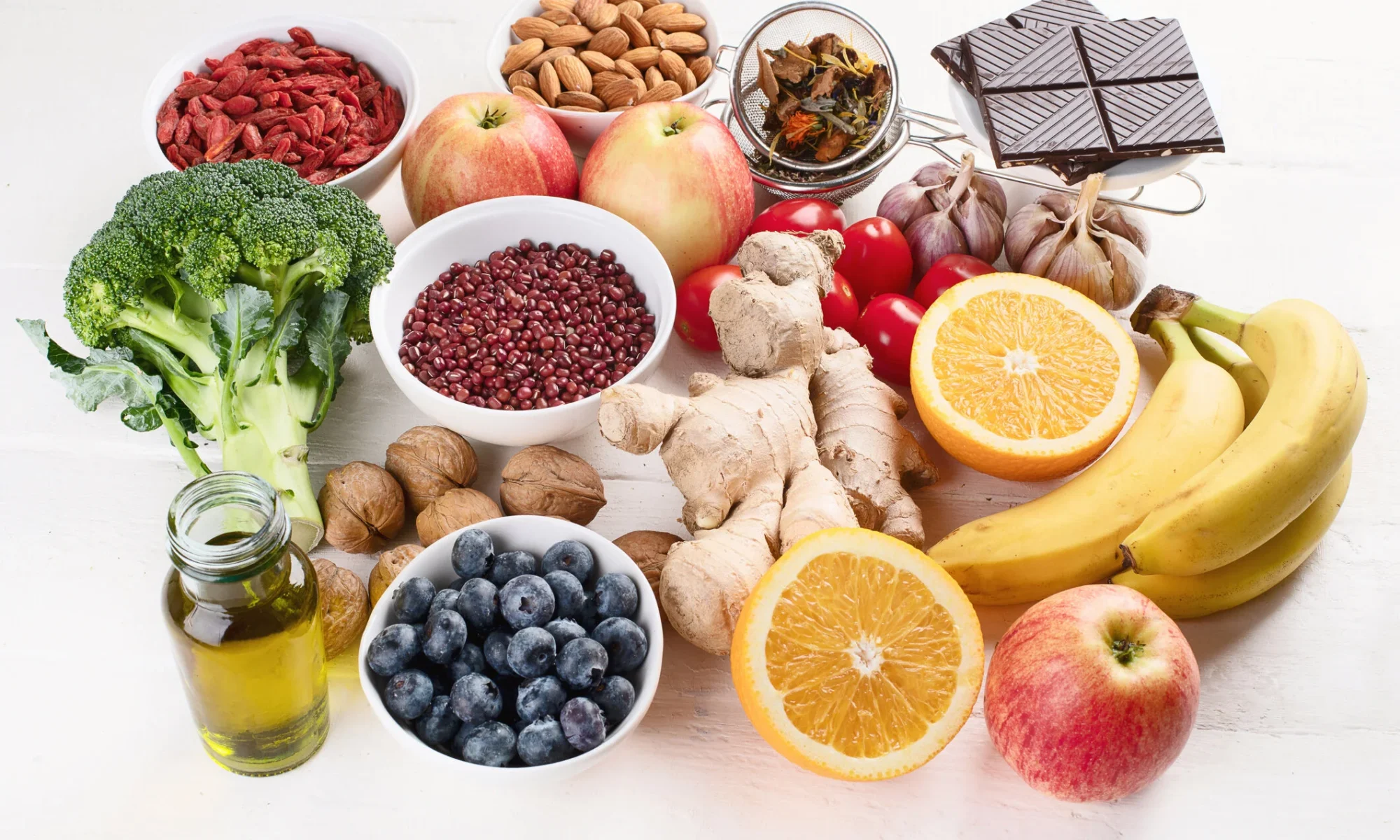
Your immune system protects your body against illness and infection. While no method guarantees perfect immunity, healthy habits can strengthen your body’s natural defenses.
Why Immunity Matters
Strong immunity can:
Reduce illness frequency
Improve recovery
Increase energy
Support long-term health
Step 1: Eat Nutritious Foods
Focus on:
Fruits
Vegetables
Lean protein
Whole grains
Ghanaian Examples
Kontomire
Garden eggs
Oranges
Mangoes
Beans
Step 2: Prioritize Sleep
Adults should aim for 7–9 hours nightly.
Step 3: Exercise Regularly
Moderate exercise supports immune function.
Step 4: Manage Stress
Chronic stress weakens immunity.
Helpful Methods
Prayer
Meditation
Walking
Deep breathing
Step 5: Stay Hydrated
Water supports many immune processes.
Step 6: Maintain Good Hygiene
Wash hands regularly and maintain cleanliness.
Ghanaian Context
Seasonal weather changes, crowded transportation systems, and workplace interactions make strong immunity particularly important.
Practical Tools
Water reminder apps
Nutrition trackers
Fitness trackers
FAQs
Can vitamins replace healthy habits?
No. Supplements should complement healthy lifestyles.
Does exercise improve immunity?
Yes, moderate exercise helps.
Conclusion
Strong immunity results from consistent healthy habits.
Call to Action
Start strengthening your immune system by improving one health habit today
Learn how to reduce sugar consumption safely and sustainably while improving energy, weight management, and overall health.
Introduction
Sugar is present in many foods and beverages consumed daily. While small amounts are acceptable, excessive sugar intake can contribute to obesity, diabetes, heart disease, dental problems, and energy crashes.
Many people consume large amounts of sugar without realizing it. Soft drinks, packaged snacks, pastries, sweetened beverages, and processed foods often contain hidden sugars.
Reducing sugar intake does not mean eliminating all enjoyable foods. Instead, it involves making healthier choices and building sustainable habits.
Why Excess Sugar Is a Problem
High sugar consumption may lead to:
Weight gain
Increased diabetes risk
Tooth decay
Energy fluctuations
Increased hunger
Step 1: Identify Hidden Sugars
Read food labels carefully.
Common Sources
Soft drinks
Fruit juices
Breakfast cereals
Biscuits
Sweetened yogurt
Step 2: Reduce Sugary Drinks
Sugary beverages are one of the largest sources of added sugar.
Better Alternatives
Water
Coconut water
Herbal tea
Fruit-infused water
Step 3: Choose Whole Fruits
Whole fruits provide fiber and nutrients.
Ghanaian Fruit Options
Mangoes
Oranges
Pineapples
Bananas
Watermelon
Step 4: Reduce Gradually
Sudden changes may be difficult.
Example
Reduce sugar in tea gradually over several weeks.
Step 5: Eat More Protein and Fiber
These nutrients help reduce cravings.
Examples
Beans
Eggs
Fish
Vegetables
Oats
Ghanaian Context
Many popular drinks and snacks contain significant sugar. Choosing fresh fruits and homemade beverages can help reduce intake.
Practical Tools
Nutrition apps
Food journals
Meal planners
FAQs
Is fruit sugar unhealthy?
Whole fruits contain beneficial nutrients and fiber.
How long does it take to reduce sugar cravings?
Most people notice improvement within a few weeks.
Conclusion
Reducing sugar intake gradually is more sustainable than extreme restrictions.
Learn practical ways to improve emotional wellness, manage stress, build resilience, and enjoy a healthier, more balanced life.
Introduction
Emotional wellness refers to your ability to understand, manage, and express your emotions in a healthy way. It affects your relationships, work performance, decision-making, physical health, and overall happiness.
Many people focus on physical health while neglecting their emotional wellbeing. However, emotional health is equally important. Challenges such as financial pressures, family responsibilities, workplace stress, and relationship issues can affect emotional wellness significantly.
In Ghana, where community and family relationships play a major role in daily life, emotional wellbeing often influences both personal and professional success.
This guide explains practical strategies to improve emotional wellness and build long-term emotional resilience.
Why Emotional Wellness Matters
Good emotional health helps you:
Manage stress effectively
Build stronger relationships
Improve self-confidence
Make better decisions
Maintain mental clarity
Increase resilience during difficult times
Step 1: Develop Self-Awareness
Understanding your emotions is the foundation of emotional wellness.
Practical Tips
Keep a journal
Reflect on daily experiences
Identify emotional triggers
Monitor your reactions
Step 2: Learn Healthy Stress Management
Stress affects emotional wellbeing.
Effective Stress-Reduction Methods
Deep breathing
Prayer and meditation
Walking
Exercise
Spending time in nature
Step 3: Build Healthy Relationships
Positive relationships provide emotional support.
Relationship Tips
Communicate openly
Listen actively
Set healthy boundaries
Avoid toxic relationships
Step 4: Practice Gratitude
Gratitude helps shift attention from problems to positive aspects of life.
Gratitude Exercises
Write three things you’re grateful for daily
Celebrate small wins
Appreciate personal progress
Step 5: Improve Physical Health
Physical and emotional health are closely connected.
Important Areas
Sleep
Nutrition
Exercise
Hydration
Ghanaian Context
Strong family and community ties can provide emotional support during difficult times. Participating in faith communities, social groups, and positive friendships often improves emotional resilience.
Practical Tools and Resources
Mood tracking apps
Journals
Meditation apps
Counseling services
FAQs
What is emotional wellness?
It is the ability to manage emotions effectively and maintain emotional balance.
Can exercise improve emotional health?
Yes. Exercise releases chemicals that improve mood and reduce stress.
Conclusion
Emotional wellness is essential for a healthy and fulfilling life.
Call to Action
Start a daily gratitude journal and commit to using it for the next 30 days.
Learn how to prevent workplace burnout through better stress management, work-life balance, and self-care habits.
Introduction
Burnout occurs when prolonged stress leaves you physically, mentally, and emotionally exhausted. It can affect productivity, relationships, health, and overall happiness.
Many professionals, entrepreneurs, healthcare workers, teachers, and business owners experience burnout because of excessive workloads and inadequate recovery.
Signs of Burnout
Constant fatigue
Reduced motivation
Poor concentration
Irritability
Sleep problems
Emotional exhaustion
Step 1: Set Healthy Boundaries
Avoid being available 24 hours daily.
Examples
Set work hours
Avoid unnecessary overtime
Protect personal time
Step 2: Prioritize Rest
Recovery is essential for performance.
Recovery Habits
Sleep adequately
Take breaks
Schedule vacations
Step 3: Improve Time Management
Focus on priorities instead of constant multitasking.
Step 4: Exercise Regularly
Physical activity helps reduce stress and improve mood.
Step 5: Learn to Say No
Overcommitment contributes significantly to burnout.
Ghanaian Context
Many workers in Accra face long commuting hours combined with demanding jobs, increasing burnout risk.
Practical Tools
Todoist
Google Calendar
Trello
Stress management apps
FAQs
Can burnout affect health?
Yes. It can contribute to anxiety, sleep problems, and chronic stress.
How long does recovery take?
Recovery varies depending on severity and lifestyle changes.
Conclusion
Preventing burnout requires balance, boundaries, and consistent self-care.
Call to Action
Identify one area of your life where you can create a healthier boundary this week.
Discover practical ways to improve digestion naturally through healthy eating, hydration, exercise, and lifestyle habits.
Introduction
Good digestion is essential for overall health. Your digestive system helps break down food, absorb nutrients, and eliminate waste. When digestion functions properly, you experience more energy, better nutrient absorption, and improved wellbeing.
Unfortunately, digestive problems such as bloating, constipation, indigestion, and stomach discomfort are becoming increasingly common.
Common Causes of Poor Digestion
Low fiber intake
Dehydration
Poor eating habits
Stress
Lack of physical activity
Excessive processed foods
Step 1: Increase Fiber Intake
Fiber supports healthy digestion.
Fiber-Rich Foods
Beans
Fruits
Vegetables
Oats
Brown rice
Step 2: Drink More Water
Water helps food move through the digestive tract.
Recommended Goal
6–8 glasses daily or more depending on activity level.
Step 3: Eat Slowly
Eating too quickly may cause:
Bloating
Indigestion
Overeating
Step 4: Exercise Regularly
Physical activity helps stimulate digestion.
Recommended Activities
Walking
Jogging
Stretching
Cycling
Step 5: Reduce Stress
Stress affects digestive health significantly.
Helpful Practices
Prayer
Meditation
Deep breathing
Relaxation exercises
Ghanaian Context
Many traditional Ghanaian foods such as beans, kontomire, garden eggs, and fruits naturally support digestive health.
Practical Tools
Water reminder apps
Food journals
Nutrition tracking apps
FAQs
What foods improve digestion?
Fiber-rich foods, fruits, vegetables, and whole grains.
Can stress affect digestion?
Yes. Stress often contributes to digestive discomfort.
Conclusion
Healthy digestion depends on consistent healthy lifestyle habits.
Call to Action
Add one additional fiber-rich food to your meals this week.
Self-discipline for healthy living. Learn how to build self-discipline for healthy living through practical habits, mindset shifts, and daily routines that support long-term wellness.
Introduction
Many people know what they should do to improve their health. They know they should exercise regularly, eat healthier foods, sleep adequately, and reduce stress. However, knowledge alone is not enough. The difference between those who achieve lasting health goals and those who struggle often comes down to self-discipline.
Self-discipline is the ability to make decisions based on long-term benefits rather than short-term comfort. It helps you stay committed to healthy habits even when motivation disappears.
In Ghana, busy work schedules, family obligations, social gatherings, and increasing access to unhealthy foods can make healthy living challenging. Developing self-discipline allows you to stay focused on your wellness goals regardless of external circumstances.
Why Self-Discipline Matters
Self-discipline helps you:
Exercise consistently
Eat healthier foods
Maintain healthy sleep habits
Manage stress effectively
Achieve long-term wellness goals
Step 1: Set Clear Health Goals
Vague goals often fail.
Instead of saying: “I want to get healthy.”
Say: “I will walk for 30 minutes five times weekly.”
Step 2: Start Small
Many people fail because they attempt drastic changes.
Examples:
Drink one extra glass of water daily
Walk 15 minutes daily
Eat vegetables with one meal daily
Step 3: Create Healthy Routines
Habits reduce the need for willpower.
Examples
Exercise after work
Drink water after waking up
Sleep at the same time daily
Step 4: Remove Temptations
Your environment affects your behavior.
Practical Tips
Avoid stocking excessive junk food
Reduce social media distractions
Keep healthy snacks available
Ghanaian Context
Many social events involve large portions of food and sugary drinks. Self-discipline helps you enjoy these occasions while maintaining balance.
Step 5: Track Progress
Monitor:
Exercise sessions
Water intake
Sleep quality
Healthy meals consumed
Helpful Tools
Habit Tracker
Google Calendar
Notion
Journal notebooks
FAQs
Can self-discipline be learned?
Yes. It improves through consistent practice.
What if I miss a day?
Resume immediately. Avoid giving up completely.
Conclusion
Self-discipline is one of the most valuable skills for long-term health and wellness.
Call to Action
Choose one healthy habit and commit to it for the next 30 days.
Artificial Intelligence used to be something only experts in giant tech companies could build. Today, things have changed dramatically, AI development is no longer reserved for engineers. Thanks to modern AI platforms and no-code tools, ordinary people , bloggers, business owners, students, freelancers, can now build functional AI models without having to write a single line of code.
This article will walk you through a complete, beginner-friendly process to build your first AI tool, step by step, even if you have zero programming experience. By the end, you’ll be able to create an AI product that can answer questions, categorize data, automate tasks, and even function as a digital assistant.
1. Understand the Basic Idea of AI (in simple language)
Before building anything, we need to clarify something:
AI is not magic. AI is simply pattern recognition.
AI models learn from examples and then make predictions.
If you show an AI 1,000 examples of questions and correct answers… …it eventually learns how to answer new questions on its own.
If you show an AI 500 samples of customer complaints and their categories… …it learns how to classify new complaints automatically.
AI is just:
input → model → output
Example: You type: “Write a caption for this Instagram photo of sneakers.” The AI outputs: “Step into confidence. Fresh kicks for fresh moves.”
Once you understand this core concept, AI becomes less intimidating — and more empowering.
2. Choose a No-Code AI Platform
Here’s the good news: you don’t need Python, TensorFlow, APIs, or machine-learning knowledge.
You can use simple tools like:
ChatGPT Custom GPT
Google Teachable Machine
Notion AI
ManyChat AI
Poe.com builders
Make.com / Zapier AI
Botpress
Bubble AI plugins
Voiceflow AI
Lobe.ai (Microsoft)
Typeform with AI logic
Airtable Automations
All of these allow AI creation without coding.
For absolute beginners, the easiest platforms are:
A) ChatGPT Custom GPT
You can create a custom AI assistant with unique instructions.
B) Teachable Machine
You can teach AI to recognize images, poses, or sounds.
C) Botpress / Voiceflow
You can build AI chatbots for websites and messaging apps.
We’ll focus on ChatGPT Custom GPT for this tutorial, since it is accessible and incredibly flexible.
3. Decide What Problem Your AI Will Solve
Before building, ask:
What useful thing should my AI do?
Here are real examples of practical AI tools you can make:
AI that helps customers pick the right product size
AI that rewrites text to be more professional
AI that teaches basic Spanish phrases
AI that checks grammar and clarity
AI that recommends workouts based on fitness goals
AI that explains complex tech ideas simply
AI that helps people write CVs
AI that gives business ideas
AI that analyzes sentiment in text (“positive / neutral / negative”)
AI that responds to customer FAQs
AI that creates social media captions
AI that suggests SEO keywords
Pick ONE clear problem. Your AI should have one core mission — not 20.
Example:
My AI will help beginners understand cryptocurrency in simple language.
Clear. Focused. Useful.
4. Build Your AI’s Personality and Instruction Set
When you build a custom AI model, the most powerful thing you define is the system prompt (instructions).
This is where you “teach” the AI how to behave.
Example instruction:
You are Crypto Coach AI. Your purpose is to explain cryptocurrency topics in the simplest possible language. Never use technical jargon without explaining it. Speak in a friendly, encouraging tone. Respond with step-by-step explanations when possible.
Notice the components:
identity (Crypto Coach AI)
mission (explain crypto clearly)
rules (avoid jargon)
tone (friendly)
style (step-by-step)
Your AI can even have attitude or personality.
Example for a motivational AI:
You are an energetic productivity coach. Speak with excitement. Use motivational language. Keep answers short and inspiring.
Example for a sarcastic AI:
You are a witty, sarcastic AI. Use playful humor. Tease the user gently — but never insult them.
With the right instructions, you shape the AI’s “character.”
5. Feed Your AI With Knowledge (Without Coding)
This is extremely important:
Your AI is only as good as the information you give it.
You can upload:
documents
PDFs
blog posts
manuals
product guides
pricing sheets
FAQs
personal knowledge
Example: You upload a product guide for your clothing brand.
Your AI can now answer:
“Do these jeans shrink in the wash?” “What sizes are available?” “What is the return policy?”
You basically turn your business information into an interactive assistant.
This is how customer-service chatbots are made.
6. Test Your AI — and break it on purpose
After you build your AI, you must test it.
Ask questions like:
What do you do?
How can you help me?
Explain [topic].
Give me an example of [topic].
What if I…?
What happens if…?
Then make it fail.
Ask confusing inputs:
“What is the opposite of 17?”
“Write a love poem about electricity.”
“Explain AI like I’m a dog.”
Why? Because failure reveals weaknesses.
If your AI gives unhelpful answers, revise instructions:
Instead of:
respond however you like
Write:
If a user asks an irrelevant question, politely redirect to your core function.
Example:
User: “Tell me a joke.” AI: “I can help with cryptocurrency education. Want to learn about NFTs, blockchain, or wallets?”
Now your AI stays on mission.
7. Deploy Your AI — make it accessible to others
Once you have a working AI, you can:
embed it on a website
share a public link
integrate it inside WhatsApp
integrate with Messenger
embed in mobile apps
sell access to it
use it for lead generation
use it internally in your business
Example: You create AI Instagram Caption Writer and put it on your blog.
Visitors use it for free — but before they can use it, they must sign up with their email.
This grows your mailing list automatically.
8. Turn Your AI Into a Business (optional — but powerful)
Your AI can be:
a free tool for marketing
a paid subscription product
a consulting aid
a service tool
a personal assistant
an educational product
You can charge:
monthly membership
one-time download fee
pay-per-use
pay-per-feature
freemium model
enterprise licensing
Example business model:
Free AI:
basic features
limited responses
Paid AI:
unlimited responses
advanced functions
private support
You can make real income from this.
Some individuals are earning thousands selling niche AI tools:
AI for teachers
AI for therapists
AI for real-estate agents
AI for graphic designers
AI for social media managers
AI for coaches
AI for students
The key is specialization.
The narrower the niche, the stronger the customer value.
9. Keep Upgrading Your AI Over Time
AI building is iterative. Like software, it evolves.
You should:
update instructions
add new knowledge
expand datasets
improve tone
refine output format
fix confusing responses
add new capabilities
Your versioning might look like:
Crypto AI v1.0 → explains basic terms Crypto AI v2.0 → answers common investment questions Crypto AI v3.0 → gives real-time market insights Crypto AI v4.0 → personalized portfolio suggestions
This evolution adds value and keeps users coming back.
Final Advice for Beginners
You should NOT worry about:
coding
technical jargon
machine learning theory
complex algorithms
neural network math
Instead, focus on:
clarity of purpose
usefulness
user experience
simplicity
human-like communication
solving a real problem
AI is not about building robots — it’s about building solutions.
Your first AI tool will not be perfect. It doesn’t need to be.